Illegal loggers blamed for
murder of Peru forest
campaigner
Authorities confirm
killing of Edwin Chota
and three other men,
with reports saying they
were shot in front of
villagers
Edwin Chota,
an activist
against
illegal
logging, was
murdered
along with
three other
men, say
Peruvian
authorities.
Photograph:
Scott
Wallace/Getty
Images
Illegal loggers
are being blamed
for the murder
of four
Asheninka
natives
including a
prominent
anti-logging
campaigner,
Edwin Chota,
near the
Peruvian
frontier with
Brazil.
Authorities in
Peru have
confirmed that
Chota, the
leader of Alto
Tamaya-Saweto, a
community in
Peru’s Amazon
Ucayali region,
fought for his
people’s right
to gain titles
to their land
and expel
illegal loggers
who raided their
forests on the
Brazilian
border. He
featured in
reports by
National
Geographic
and the
New York Times
that detailed
how death
threats were
made against him
and members of
his community.
“This is a
terribly sad
outcome. And the
saddest part is
that it was a
foreseen event,”
said Julia
Urrunaga, Peru
director for the
Environmental
Investigation
Agency, an
international
conservation
group.
“It was
widely known
that Edwin Chota
and other
leaders from the
Alto
Tamaya-Saweto
community were
asking for
protection from
the Peruvian
authorities
because they
were receiving
death treats
from the illegal
loggers
operating in
their area.”
Local leader
Reyder Sebastian
Quinticuari, the
president of
Aconamac, an
association of
Ashaninka
communities,
told local media
that Edwin Chota
and his
companions were
killed on 1
September but
the news was
delayed due to
the remoteness
of the location.
“We must
ensure that
justice is done
and this crime
does not go
unpunished.”
A 2012 World
Bank report
estimated that
as much as 80%
of Peru’s
logging exports
are
harvested
illegally [PDF]
and
investigations
have revealed
that the wood is
typically
laundered using
doctored papers
to make it
appear legal and
ship it out of
the country;
while a 2012
report by the
Environmental
Investigation
Agency indicated
at least 40% of
official cedar
exports to the
US
included
illegally logged
timber.
A recent
operation
conducted by
Peruvian customs
looked at other
timber species
and, in three
months,
stopped the
export of a
volume of
illegally logged
timber
equivalent to
more than six
Olympic pools.
Announcements:
Remember evening film
and presentation options for semester-long assignment!
Question 1:
How does science work? What
is the "scientific method?"
How does science
differ from non-science?
What is
"pseudo-science"?
Question 2:How are hypotheses
developed and tested?
What is a hypothesis, & how is it formulated?
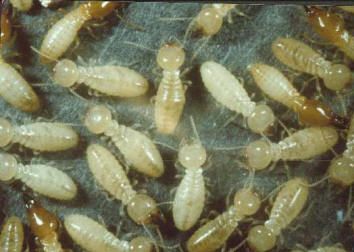
Termite Wrangling Exercise:
Roles of team
members:
·Termite wrangler
·Recorder
·Time keeper
·Encourager (keeps the discussion
focused), collect all 4 folders at the end of class. Replace in box at front of
room.
Time for activity:
~60 minutes.
Equipment:
termites in small petri dish, white paper, paint brush, 1 pen & 1 pencil from
the equipment supply up front
Procedure:
1.On a sheet of white paper, draw two
circles (1 pen, 1 pencil) about the size of a silver dollar near each other on the center of the
paper.
2.Termite wrangler -- release the
termites onto the paper.
3.Team -- discuss what you observe.
4.Recorder -- take notes on notebook
paper.
5.Team -- Develop a testable question,
then write it as a formal hypothesis.
6.Design a method to test the question.
Everyone in the group make predictions about what you will observe. Record.
oTermites can be placed back in
their habitat while you are doing this.
7.Test the hypothesis as many times as
possible.
8.Record the results.
Group discusses,
getting feedback from all individuals (hint: try round-robin),
and writes responses to the following questions on Paper to turn in:
1.What was your group's
hypothesis?
2.Describe
the experimental design.
3.What variables were involved in your
experiment?
4.What was the sample size (how many
times did you do the experiment?)
5.What were the results of your
experiment?
6.Based on your question, do the data
support it or not support it -- explain why.
7.What are the potential sources of
error in your experiment?
Place
the original copy of
your work in the Recorder's folder, give all folders to Encourager to put in box at front
of room.
Homework:
Find some background information to help assess your hypothesis about the
termite behavior, and come prepared to share it with the class next time.
Science is a way of
knowing - what is the nature of science?
Science is:
Repeatable,
although not all questions are testable.
If results do not
support hypothesis, investigator returns to ask questions, develop and test new
hypothesis.
Hypotheses are
tested: evidence either supports or discredits the hypothesis.
Hypotheses are
never PROVEN, but if not rejected are added to the body of knowledge, allowing
us to make better and better predictions about the behavior of the natural
world.
What is the nature
of the evidence? -- critically evaluate evidence throughout this course!